

Description
Taught by Werner Pfeifer, an experimental archaeologist and wilderness skills educator with over 30 years experience specialising in hunter-gatherer technologies. Raised on a bush farm in Namibia, he trained in Europe under leading practitioners in flint knapping and traditional bow making, and has since taught extensively across Germany, England and southern Africa. His work focuses on practical, hands-on reconstruction of Stone Age skills, particularly North European bow design, grounded in real-world testing through wilderness immersions and teaching at the Stone Age Steinzeitpark. Click here for more about Werner.
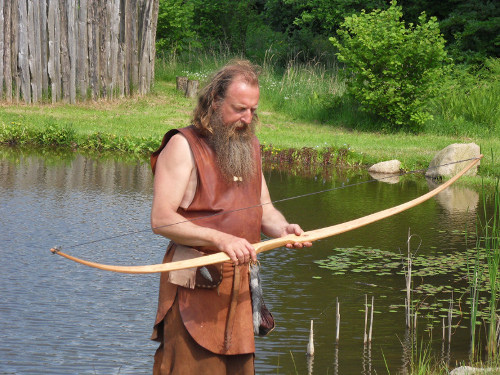
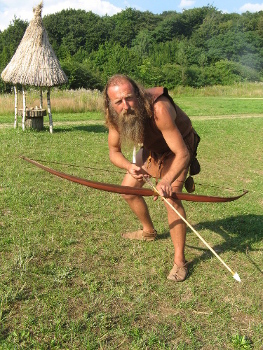
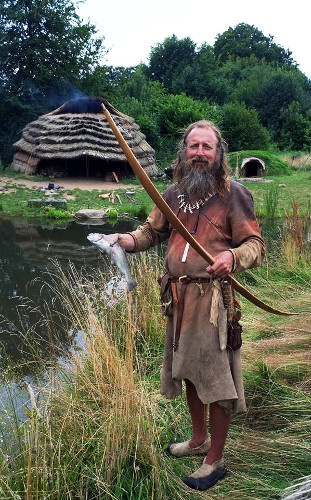
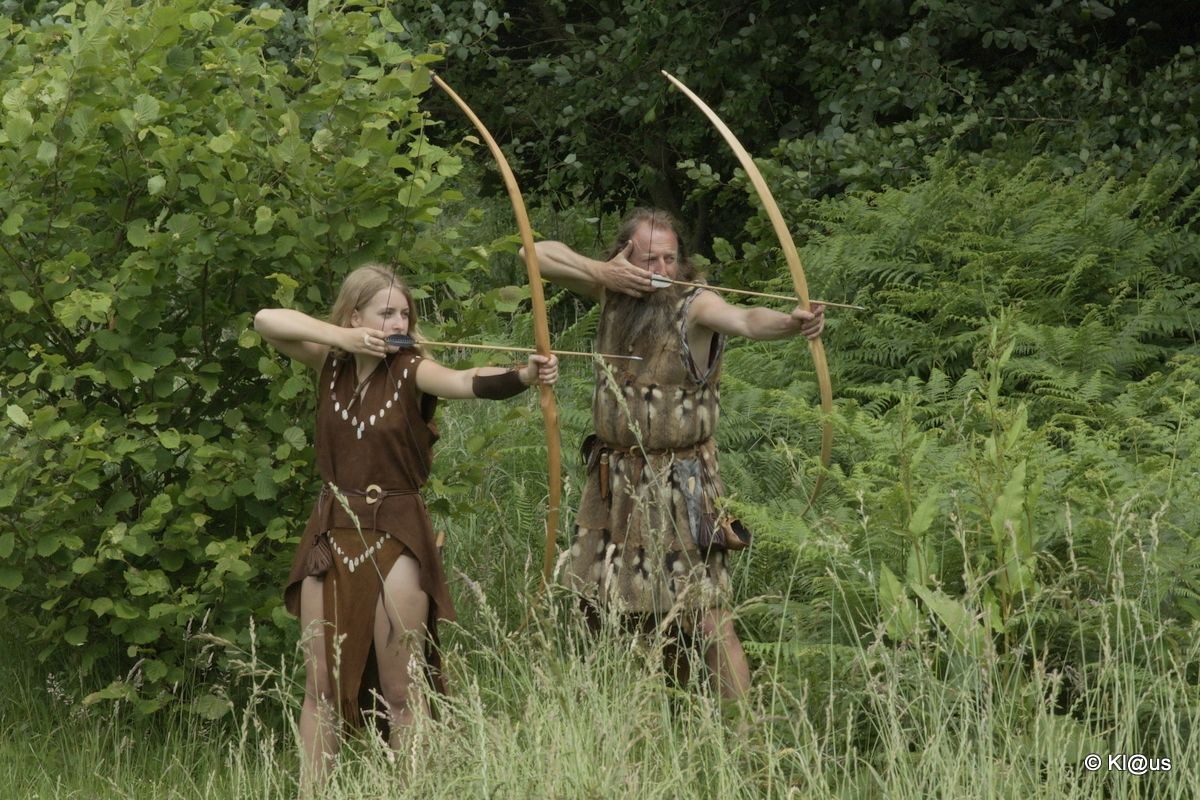
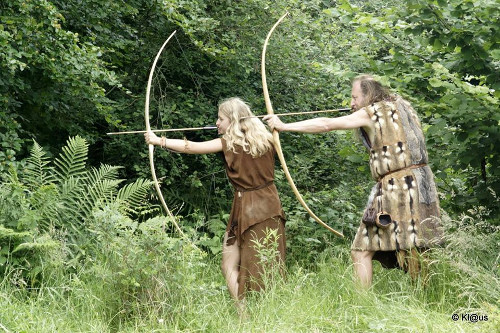
The first day begins with an introduction to different bow types and a brief overview of their historical use. This sets the context for what you are building and why the form matters. You will be shown safe handling of the knife and hatchet, followed by a clear explanation of the overall process from stave to finished bow.
Work begins by marking out your stave and removing material with the axe to establish the basic shape. This is the rough phase, where the aim is to define the outline and proportions of the bow rather than refine it. Most of the day is spent working the wood down to a usable form.
Day 2 – Refinement and string making
The second day focuses on controlled shaping. Using knife and axe, you continue reducing and refining the limbs of the bow, moving from rough form towards a more precise and balanced structure. Attention shifts to how the bow will bend, and material is removed more carefully to improve symmetry and performance.
During this stage, you will also make your bowstring. This includes learning how to twist and tension the string so that it works correctly with the bow you have made. Werner will show several ways of making a bow string, for instance from intestines or lime bark. You will learn how to twine a string from artificial sinew for your bow though, so you have a strong and durable bow that will last a long time,
Day 3 – Finishing, arrows and shooting
On the final day, the bow is completed. This includes final shaping, smoothing, and sharpening of the working surfaces so that the bow performs safely and efficiently.
You will then make two arrows: one in a more modern style and one based on Stone Age forms. This allows you to understand differences in construction and use. The Stone Age arrow is of hazel. You will shave and sand it to the correct diameter, straightening it over a fire, before attaching an antler or flint arrowhead. The modern arrow is intended for practice and therefore it has a metal tip. You put feathers on both arrows. Everything is glued with birch pitch.
The course concludes with an introduction to archery. You will learn basic shooting technique, try different styles, and practice with your own bow to see how well it shoots. Werner will also give you guidance on storage, care, and maintenance so that your bow remains usable over time.
This is a practical, hands-on course throughout. The emphasis is on producing a working tool and understanding the process well enough to repeat it independently.
Kit List
- You will need to bring a sharp knife with a short blade that can carve wood.
- You will also need a small, sharp, handy hatchet. Make sure you get an axe that is good for carving (e.g. Gransfors Bruks Small Hatchet or Carving Axe) and not a heavy one for splitting logs (e.g. Bauhaus). The decisive factor is a flat cutting edge, i.e. a very acute-angled grind. With wood splitters, the sharpening angle is too large and the axe is too heavy.
- A whetstone for sharpening your knife and hatchet.
- Please bring your own lunch and snacks. If you wish to camp on site you may do so at no extra charge. Please get in touch to find out more this.
- A stave will be provided (we have ash, aspen and rowan) or you can bring your own.
